
Commission Celebrates New Era of Land-Grant Research
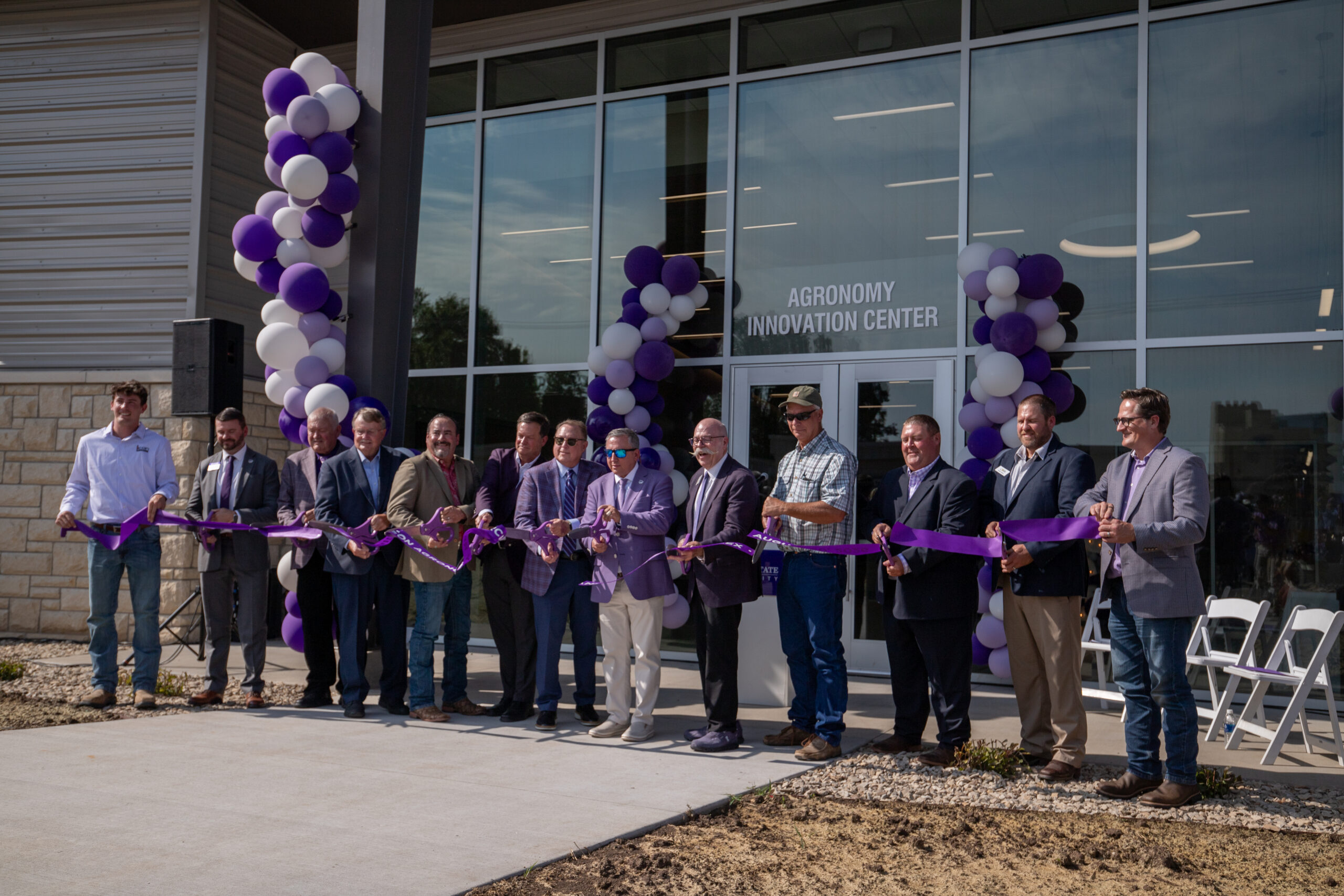
Four years after the Kansas Soybean Commission pledged its largest-ever checkoff investment to Kansas State University’s Agriculture Innovation Initiative, KSC celebrated the opening of the new Agronomy Innovation Center. It’s a significant upgrade to the University’s agronomic research spaces, increasing its impact for farmers for years to come.
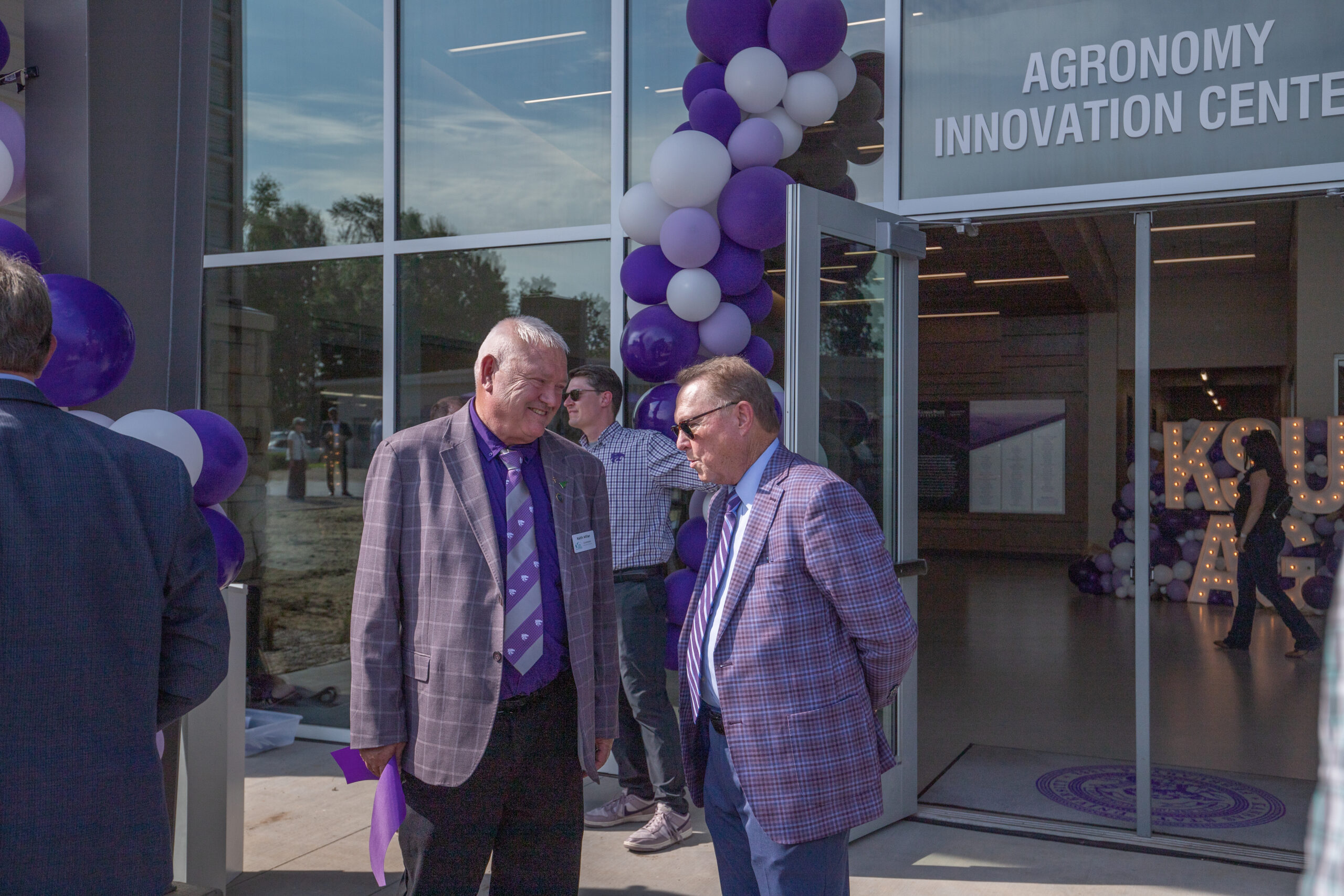
“It was a real joy for me to help cut the ribbon for the new center,” says Keith Miller, KSC chairman and Great Bend farmer. “That’s where they’ll do the research that we’re funding. We’re excited to see the researchers have quality buildings to work out of.”
As the state’s land-grant university, K-State provides vital agronomic research for Kansas farmers. Modernized facilities will create opportunities to be competitive in the agriculture industry, moving Kansas agriculture forward with a land-grant research program that remains among the nation’s leaders.
Through longstanding relationships with K-State researchers, KSC recognized the need for this investment. The Agronomy Innovation Center provides faculty with a significantly modernized and expanded workspace, including updated equipment and climate-controlled lab areas. Sarah Ganske, a weed extension specialist whose research is supported by the soybean checkoff, calls it an investment in the university’s most valuable resource: people.
“The people are what make the research and extension happen,” she says. “The new facilities will help us be more efficient, keep workers safer and more comfortable, and attract new talent.”
Ganske also believes these state-of-the-art facilities may attract new partners, opening up new funding streams to support production research.
“Perception is reality,” she says. “The image of these new buildings communicates the world-class quality of the work we do to potential new students, faculty and partners.”
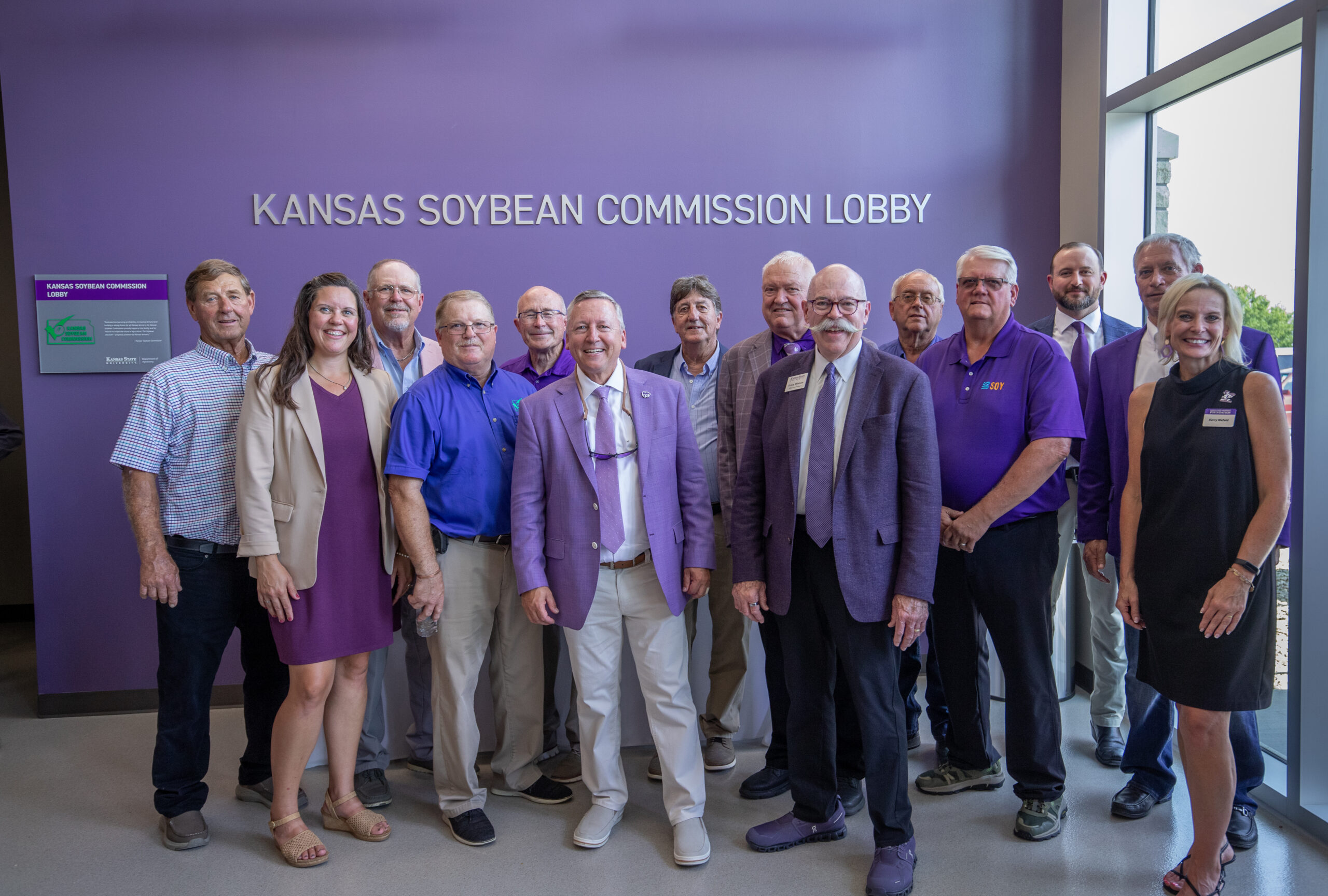
KSC’s commitment to advancing soybean research at K-State was recognized by the naming of the new building’s lobby, reflecting KSC’s role as one of the initiative’s first major donors.
“Putting our name on the wall in the lobby was a very nice gesture,” Miller says. “K-State is very important to the future of ag in the central part of the U.S., and the research they conduct is there to make sure that our soybeans are profitable in the future.”